The problem
An Australian university Research Office — supporting researchers across STEM, HASS and clinical disciplines — was watching the same problem repeat each ARC and NHMRC round: researchers were submitting to grants they had personal awareness of, missing grants where their work fit better than the grants they applied for. The Research Office had three FTE doing match-making the old way: reading grant scopes, knowing researcher profiles, sending emails saying "you should look at this".
That capacity supported maybe 200 researchers actively. The other 1,600 were left to their own awareness, which meant historically-narrow application patterns and historically-narrow success rates.
The Deputy Vice-Chancellor (Research) didn't want a "grant-finder" tool. The university had tried two and both produced shallow keyword matches that researchers found insulting. She wanted match quality — the kind of match an experienced research-development manager would suggest.
What we did
Four weeks of scoping with the Research Office (we shadowed two RDMs through two complete grant-matching cycles), ten weeks of build, two weeks of pilot with a STEM faculty. The deployed system:
- Ingested historical ARC and NHMRC outcome data — 2,300 funded and unfunded applications across five years, where publicly available
- Built researcher profiles from publication records, prior-grant CVs, and current research-plan statements
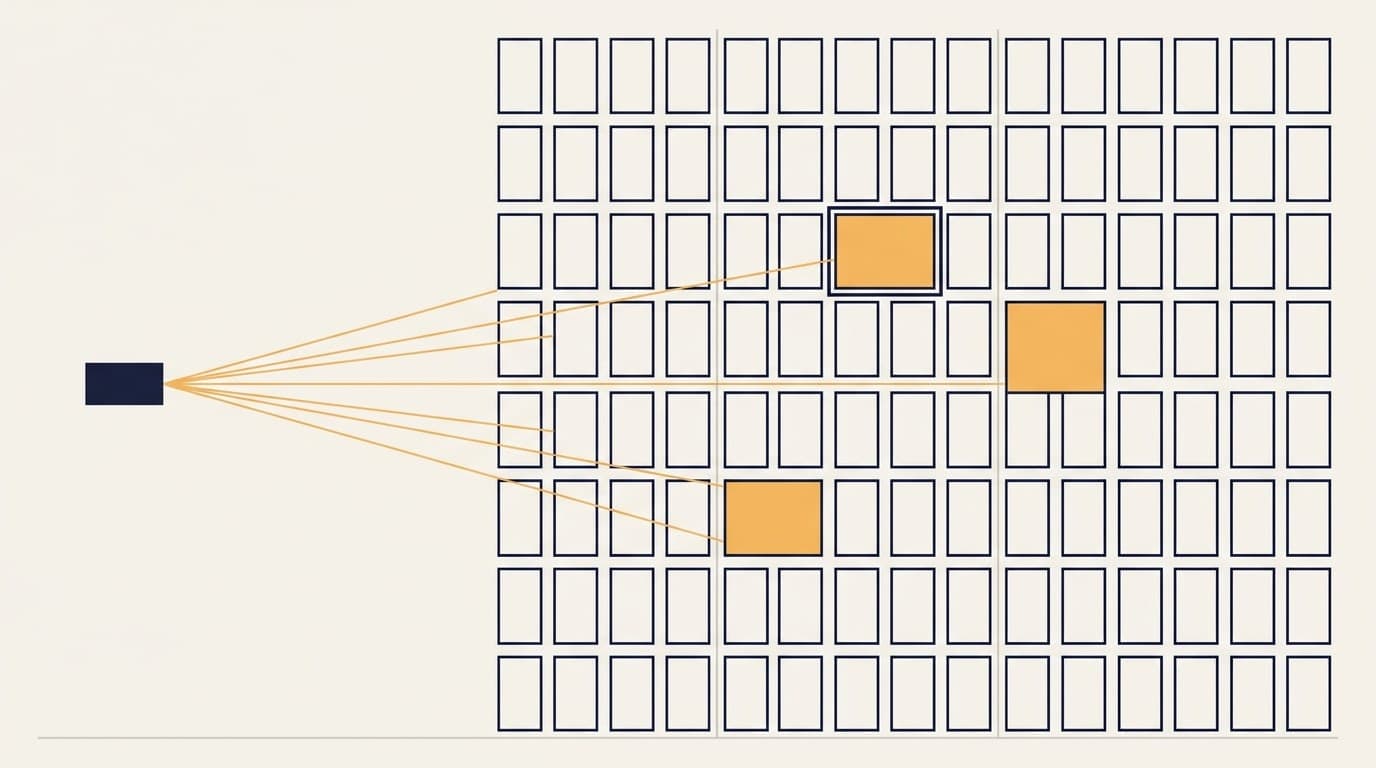
- Matched researcher profiles to live grant scope documents using semantic retrieval grounded in the language of historically-funded applications in that scheme
- Filtered matches through the Research Office's manual triage queue — the RDM team retained the decision authority on which matches to surface to the researcher
- Produced a "why this match" narrative for every surfaced opportunity, citing the specific historical funded application that informed the match
The system didn't auto-email researchers. The RDMs reviewed every match. The system did the discovery work that no human could do at 1,800-researcher scale.
The outcome — across one ARC round and one NHMRC round
| Without the system | With the system | |
|---|---|---|
| Researchers actively supported by RDM | ~200 | All 1,800 (light coverage) + ~340 (high-touch) |
| New matches surfaced to researchers | n/a | 84 |
| New matches → submitted applications | n/a | 19 |
| New matches → funded applications | n/a | 6 (~32% hit rate vs. base-rate ~22%) |
| Additional funding secured in cycle | n/a | A$2.3M |
| Cost per match generated (model + infra) | n/a | A$0.40 |
| RDM time per researcher per round (light coverage) | 0 (they weren't covered) | ~12 minutes |
The 6 funded applications averaged A$385K each. The system paid for the full year of the engagement out of one of those grants.
What I needed was a research-development team of forty people, not three. What I got was a system that does the discovery work and lets my three people apply judgement at scale.
— Deputy Vice-Chancellor (Research), Australian university
What we'd do differently
Index unsuccessful applications more carefully. We indexed funded outcomes heavily, unsuccessful ones lightly. We retrofitted this in month four — why a similar application was not funded turned out to be as informative as why one was.
RDM training in week one. The RDMs were involved from week one in scoping but only formally trained in week ten. The triage queue was new tooling for them and they took longer than necessary to trust it.
What we didn't do
We didn't auto-submit any application. We didn't bypass the RDM team. We didn't ingest unpublished work, draft applications, or non-public researcher information. We didn't train on the university's grant-application drafts.
The system used only publicly available historical-outcome data. The match quality came from the modelling of grant language (what reviewers say funded applications "sound like"), not from surveillance of researchers. This was the design decision the university's research-ethics committee scrutinised most carefully. They signed off after week six.